Nerve Repair
Evaluate Early. Refer Timely. Restore Sensation.
Microsurgical repair of the inferior alveolar and lingual nerves restores feeling after numbness or altered sensation caused by wisdom tooth removal, dental implants, root canals, or facial trauma. Timely recognition improves recovery and quality of life.
Request a Consultation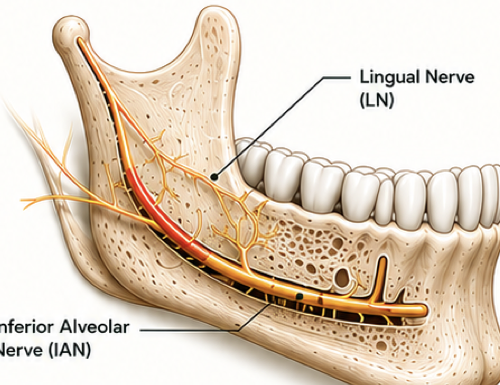
Microsurgery
Microsurgical Precision
Specialized trigeminal nerve microsurgery for the best chance of recovery.
Time-Sensitive Care
Same-week evaluations for acute nerve injuries when every week matters.
CBCT-Guided Diagnosis
Advanced imaging to pinpoint nerve compression, laceration, or transection.
Board-Certified Surgeons
Dr. Ryan Look and Dr. John McElveen, with specialized surgical training.
Restoring Sensation After Nerve Injury in White Plains, MD
The inferior alveolar nerve (IAN) and lingual nerve (LN) provide feeling to the lower lip, chin, gums, and tongue. When one of these nerves is injured, patients may experience persistent numbness, painful sensations, or difficulty speaking and eating. While many injuries recover on their own, some require microsurgical repair to restore sensation and quality of life.
At Charles County Surgical Arts in White Plains, MD, Dr. Ryan Look and Dr. John McElveen evaluate and treat nerve injuries using advanced diagnostic imaging and microsurgical techniques. As one of the few practices offering trigeminal nerve microsurgery in Southern Maryland, we are a trusted referral destination for patients and providers throughout Charles County — including Waldorf, La Plata, Brandywine, Hughesville, Indian Head, and Bryans Road — as well as neighboring St. Mary's and Calvert counties. Because the timing of treatment strongly affects outcomes, early evaluation is essential, and our convenient location just off Route 301 keeps specialized care close to home.
When Is Nerve Repair Recommended?
Microsurgical nerve repair may be indicated when:
- Partial or complete numbness or severe altered sensation persists beyond 4–8 weeks.
- There is little or no improvement in sensation over time.
- Imaging or examination suggests nerve compression, laceration, or transection.
- A painful neuroma has formed at the site of injury.
Common Causes & Symptoms
Nerve injuries can result from routine dental procedures or trauma. Recognizing the symptoms early is the first step toward recovery.
Common Causes
- Wisdom tooth removal
- Dental implant surgery
- Root canal therapy
- Facial trauma
- Local anesthetic injury
Symptoms
- Persistent numbness
- Tingling or "pins and needles"
- Burning or shooting pain
- Altered sensation of the lip, chin, gums, or tongue
- Difficulty speaking or chewing
- Loss of taste (lingual nerve injuries)
Treatment Timeline
The timing of treatment strongly affects the outcome. The first 3–6 months offer the best window for microsurgical repair.
Document & Examine
Symptoms are documented and a neurosensory examination is performed to establish a baseline and map the affected area.
Re-Evaluate
If symptoms persist without improvement, the nerve is re-evaluated and referral for microsurgical assessment is recommended.
Optimal Window for Repair
This is the ideal window for microsurgical repair when indicated, offering the most predictable recovery of sensation.
Select Cases Still Benefit
Surgery may still be beneficial in select patients, although outcomes are generally less predictable as time passes.
Surgical Options
The approach is tailored to the type and severity of the nerve injury, confirmed through examination and imaging.
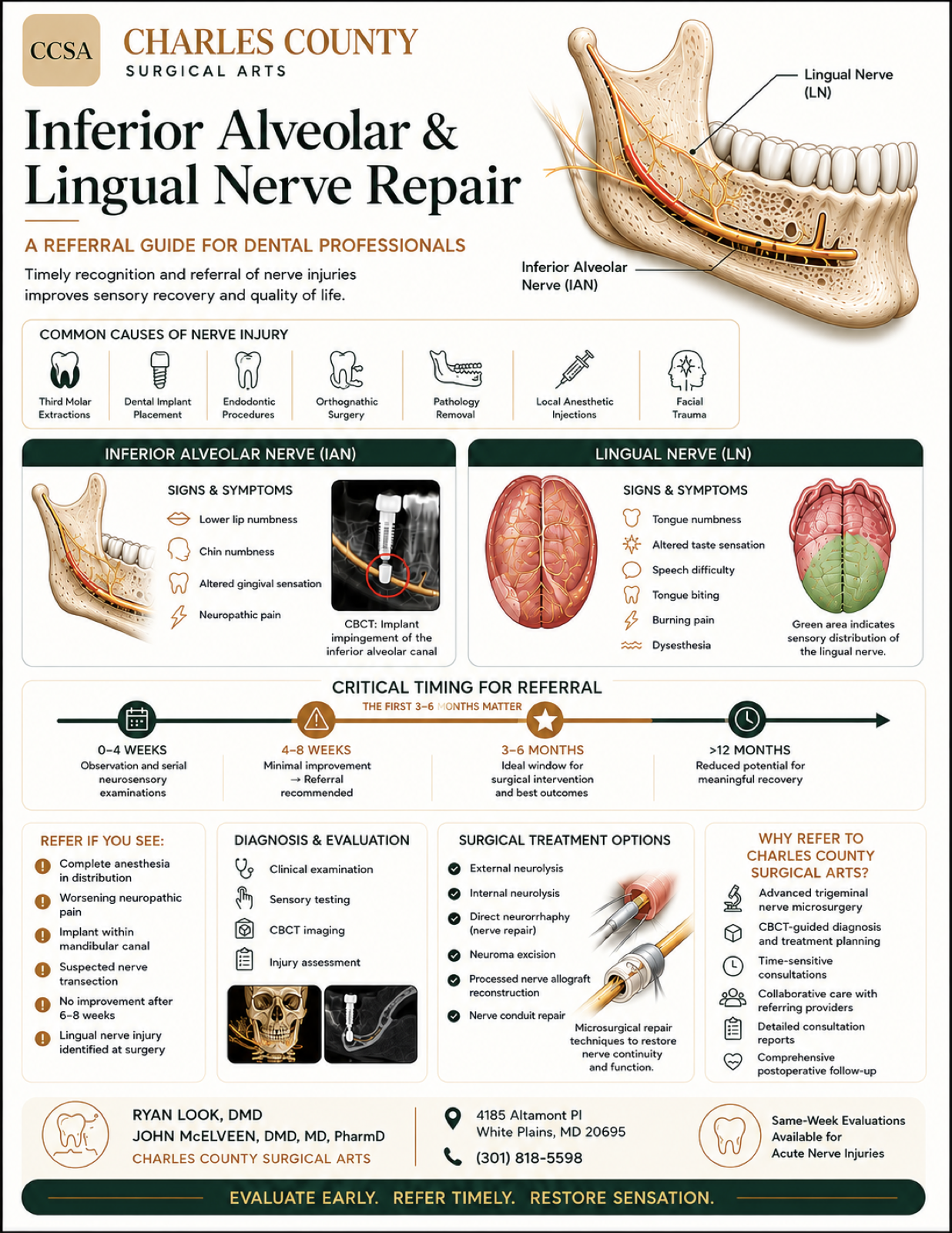
A Referral Guide for Dental Professionals
Timely recognition and referral of nerve injuries improves sensory recovery and quality of life for your patients. We partner with general dentists, endodontists, and oral surgeons throughout Southern Maryland.
- Same-week evaluations available for acute nerve injuries
- CBCT-guided diagnosis and treatment planning
- Collaborative care with detailed consultation reports
- Comprehensive postoperative follow-up
Nerve Repair Serving White Plains & Southern Maryland
Our White Plains office sits in the heart of Charles County, just off Route 301, with easy access from Route 5 and Route 228. Most patients reach us in under 30 minutes.
White Plains, MD
4185 Altamont Pl, just off Route 301. Free parking and wheelchair-accessible facilities at our home office.
Waldorf, MD
Just a 10-minute drive north on Route 301. See our Waldorf services.
La Plata, MD
Under 15 minutes via Route 301 south. See our La Plata services.
Brandywine, MD
A short drive north on Route 301. Learn more.
Charles County
Serving Hughesville, Indian Head, Bryans Road, Port Tobacco, and surrounding communities.
St. Mary's & Calvert
Patients from Leonardtown, Prince Frederick, and across Southern Maryland. Leonardtown · Prince Frederick.
Nerve Repair FAQs
Answers to common questions about inferior alveolar and lingual nerve injury and repair.
Don't Wait to Address Nerve Injury
Early evaluation gives you the best chance at restoring sensation. Schedule a consultation with our board-certified oral surgeons today.
Schedule Your Consultation